Problem
How might we design a way to visualize and interact with emotional memories in a 3D space?
Design Concept
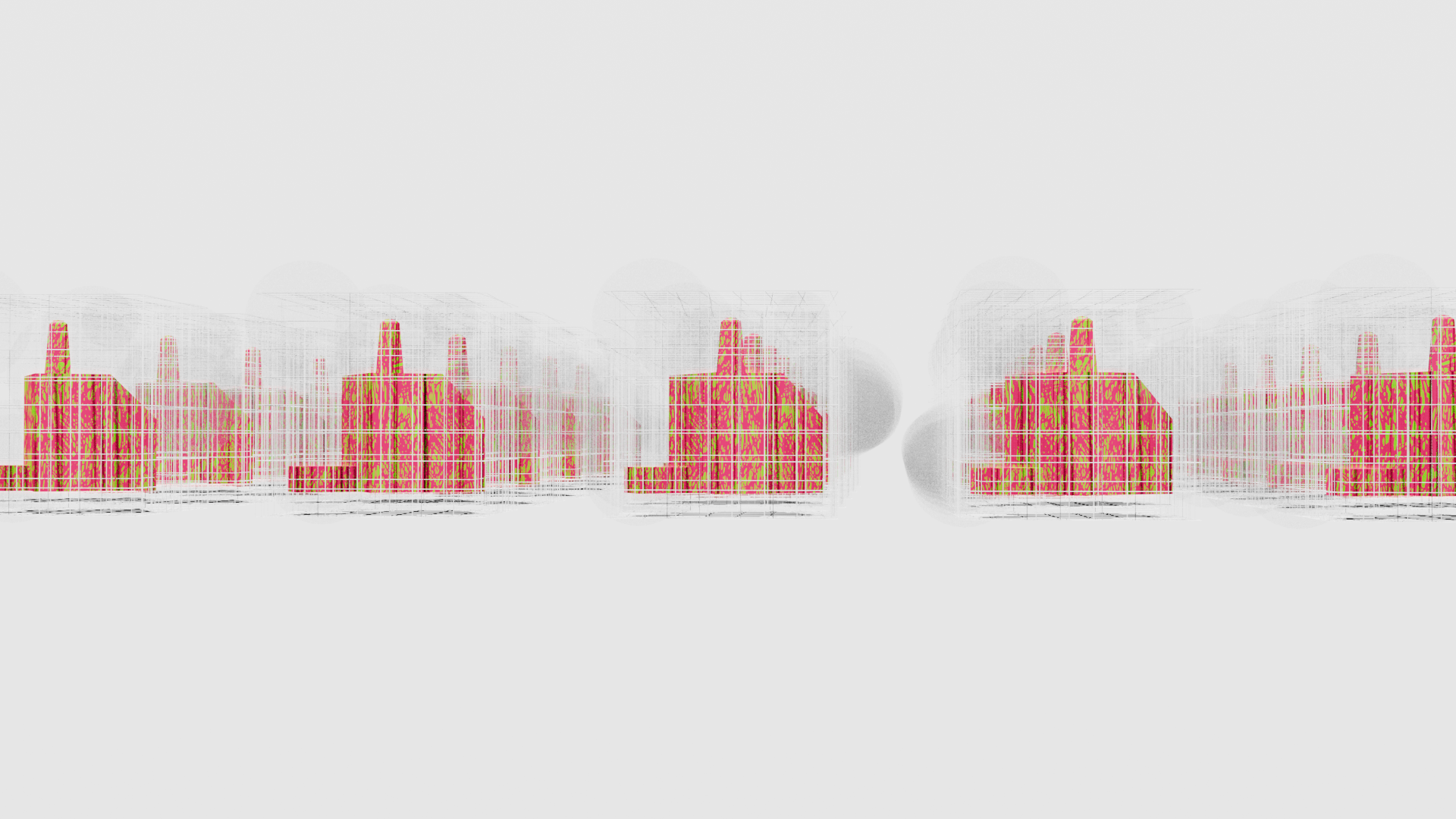
The Affinity Visualizer is a 3D interactive tool that allows users to explore and categorize their emotional experiences within a spatial grid. By placing emotional nodes in a 3D space, users can visualize the relationships and influences between different feelings and memories. Inspired by a friends instagram posts of the same nature, the idea was to outline a specific feeling and curate relational images that re-embodies that paticular state of mind.
Users place "nodes" that function as attractors in the 3d space, thickening or thinning the members of the grid around them. Attractors are named and be can correlated to a specific memory, song or immage. As nodes are stacked, users begin to create the idea of an influence cube or sphere, highlight by the spheres combined range creating a shape of influence.
Thus this cubic array becomes the literal representation of Derrida's archive as if it has been driven by a kind of fever: a compulsion to capture and preserve that is always haunted by the fear of loss. We archive precisely because things disappear. Memory is leaky. The very act of preserving something is an acknowledgment that it is already slipping away.
In laymans terms: Derrida's Visualiz(e)r is built around this perpetual loss. It doesn't pretend to capture feelings accurately. It invites users to approximate and then to watch those approximations erode on the participants own terms.
The Anti Shape
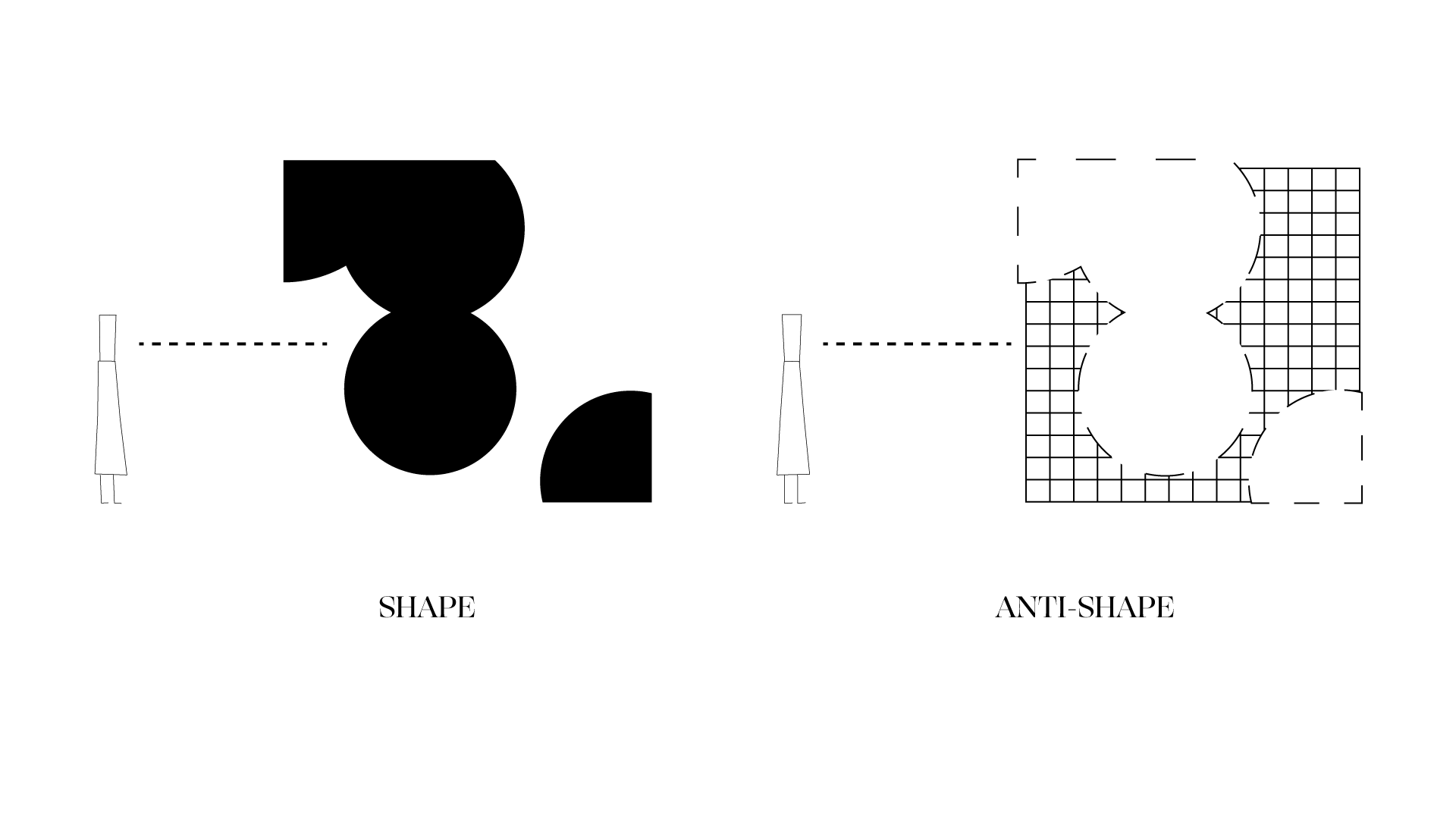
After a user has finished placing their nodes, we can see a result of the inverse volume --- the anti shape, or rather what remains after all the mass has been pulled away to form the moats and islands of feelings that constitute the grid. In Grammatology the inverse of the shape is both a mold and the feeling you can't name, the presence of it enables the positive shape to be legible, influencing the idea of the traces of everything your memory didnt reach.
This feature: a byproduct of placing nodes on a cubic array sits with a somewhat uncomfortable idea: that the most honest representation of emotional memory might be its absence as much as its presence. It is, in Derridic terms, the trace of the trace.
Timeline Scrubbing
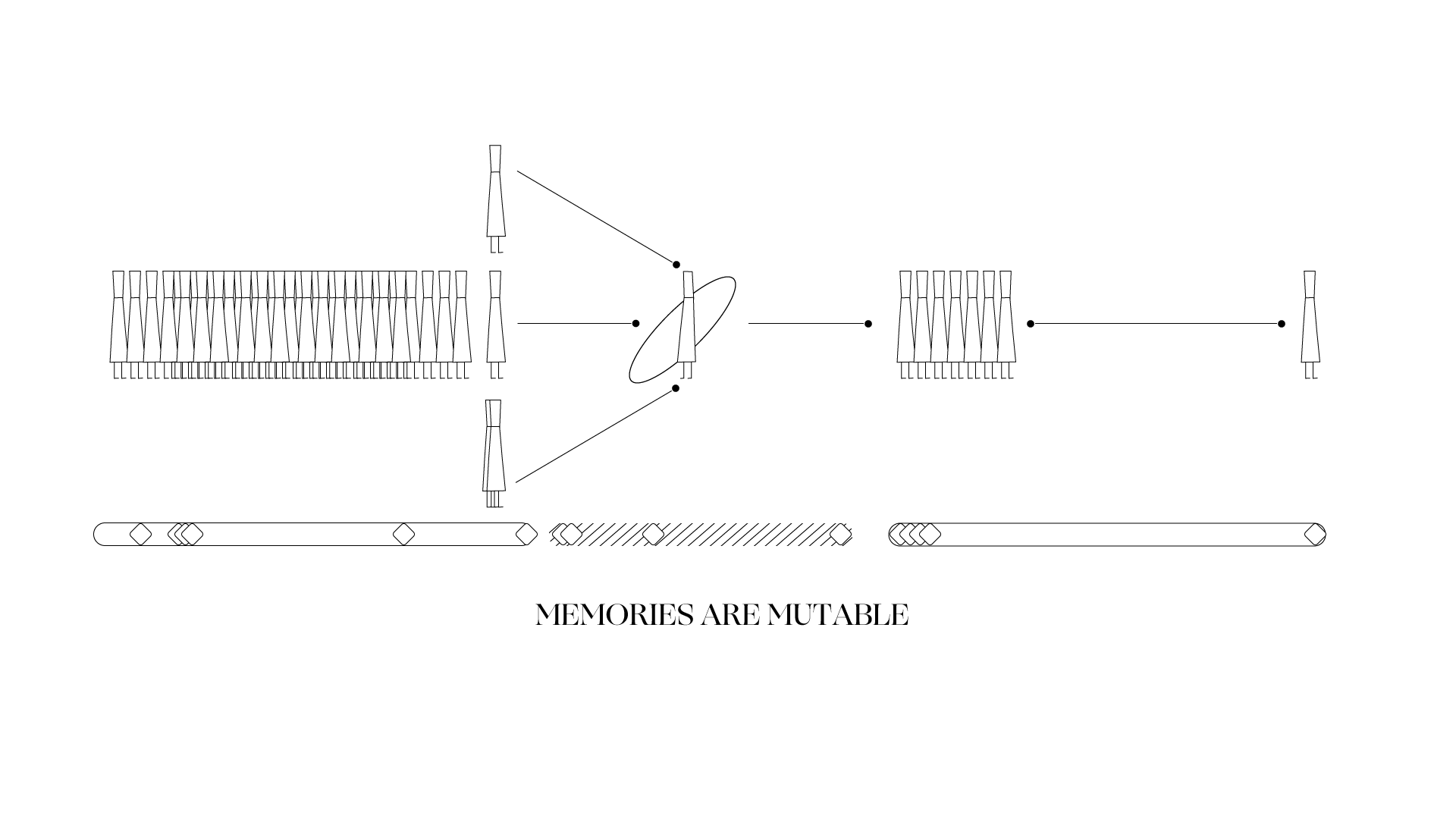
Memories are mutable, and the way we remember things changes over the course of our lives. Inspired by the deconstructivist buildings of Daniel Libeskind, the idea of a timeline scrubbing feature was to allow users to see how their feelings and memories have evolved over time. By scrubbing through a fragmented timeline, nodes fade and shrink in influence, similar to how our memories fade and are re-written over time.
In addition to creating a emotional memory visualizer through the grid, users are encouraged to also place nodes on the timeline to pinpoint moments that could span months or years that have pivotally changed how that associated feeling "felt", whether through a traumatic event, emotionally charged goodbye, or a passing moment.
The conjunction of timeline and grid illustrates this directly. A node placed in the spatial grid at a particular moment on the timeline isn't just a data point: it's a record of how that emotion existed then, in relation to those surrounding feelings, with that amount of influence. As the timeline is scrubbed, the node's presence degrades, contracts, and eventually disappears because the trace of it has thinned.
Trace and Evocation
The mutability of the timeline and the ability to "node" it was inspired by the concept of Derridic Trace: where every present moment has the influence of what came before and the anticipation of what comes after. By having a timeline in conjunction with the cubic grid, we can illustrate that emotions aren't discrete events but traces of all the feelings we've catagorized that bleed through. Having a timeline that outlines emotions and feelings as well as watching the degredation of nodes "further" from the present illustrate the change in how we feel things over time.